Essays and reflections
Plain-language writing on the science, methods, and civil-rights frame of supported, neuromotor-informed communication.

Typing Didn't Take My Autism Away. It Gave Me a Lifeline.
Reagan Fast, a nonspeaking autistic college student and Advocacy Intern with Communication 4 ALL, explains why communication did not erase her autism — it gave her a way to move through life with it.
Read →
How Did We Miss Motor Differences in Autism for So Long?
Research suggests nearly 90 percent of autistic people may have significant motor differences — yet assessment still treats motor ability as if it had little bearing on what someone understands, communicates, or learns.
Read →
Who Gets to Speak? The Institutional War Over Nonspeaking Autistic Communication
A months-long investigation into the credentialing bodies, reimbursement structures, commercial interests, and professional relationships that decide which communication methods institutions recognize — and what it costs the nonspeaking people whose methods are excluded.
Read →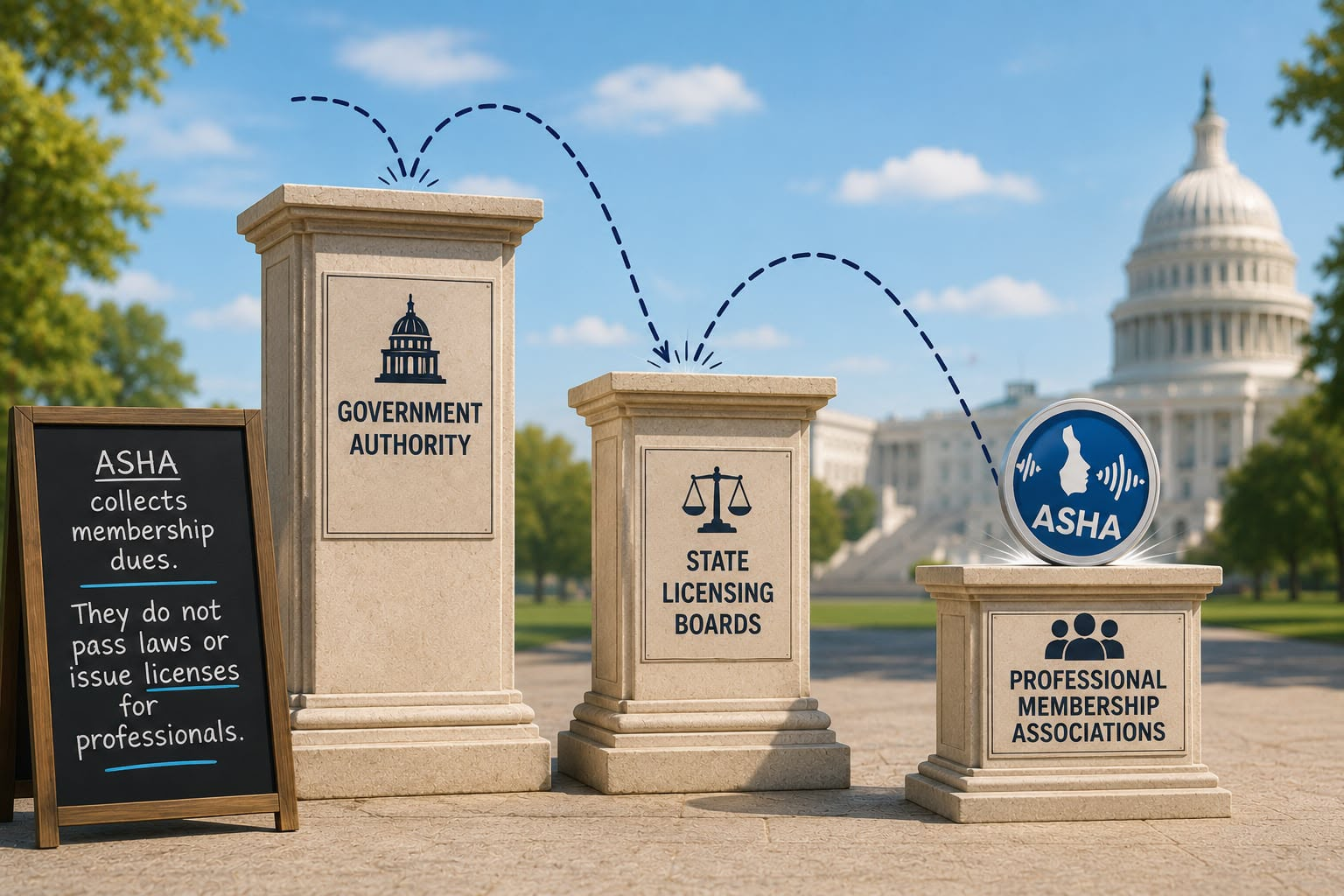
Five Things Everyone Should Understand About ASHA
ASHA is a private membership association, not a government regulator. Its position statements are opinions — not statutes — and families and clinicians deserve to know the difference.
Read →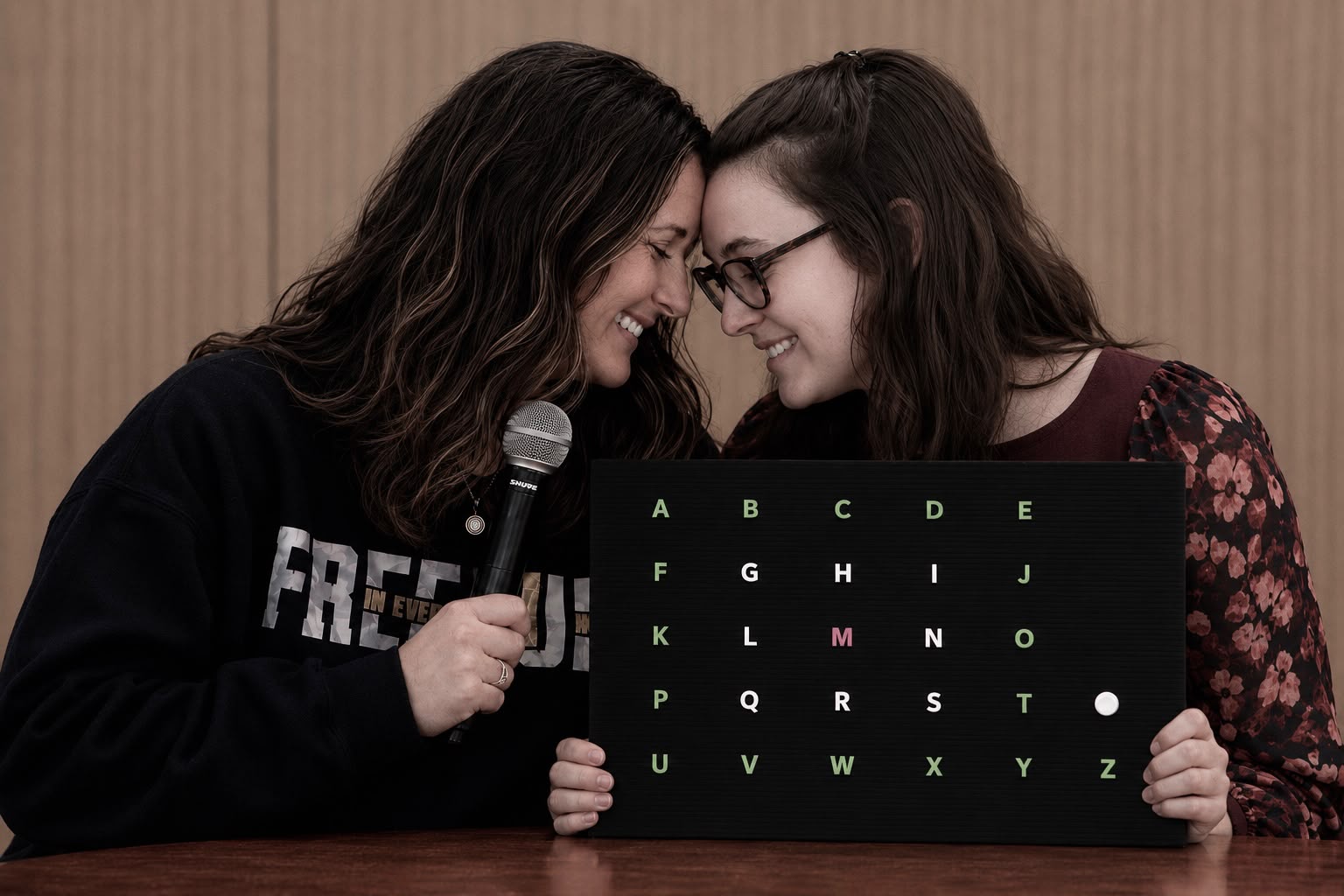
Support Is Not Substitution: Nonspeakers Deserve the Same Safeguards, Common Sense, & Communication Rights
A mother and her nonspeaking 19-year-old daughter on the double standard around touch, motor support, and authorship — and why the ADA already gives us the right frame for evaluating communication access.
Read →
The Telepathy Tapes, savant skills, and the right to communicate
A viral podcast introduced millions of listeners to nonspeaking spellers. However people feel about the telepathy claims, reported savant-type abilities are not new in autism — and they are not a reason to withhold basic communication rights.
Read →
The same critics, over and over: David Kaufer on conflicts of interest in the anti-spelling world
A small group of self-appointed experts keeps appearing in every article, every op-ed, and every hit piece against assisted communication. David Kaufer walks through who they are and what they have to gain.
Read →
Autism Spectrum News dedicates an entire issue to nonspeakers — including spellers and typers
The latest Autism Spectrum News is exclusively devoted to nonspeaking autistic people, with articles by nonspeaking spellers and typers themselves. It is a milestone for legitimacy, inclusion, and accountability in the field.
Read →
Silenced No More: The Truth About Nonspeakers That Critics Don't Want to Hear
Modern research using augmented reality headsets is providing direct evidence that nonspeakers can communicate independently — challenging decades of assumptions about intellectual disability and authorship.
Read →
"Tell Them You Love Me": the case for guardrails, not bans
The Anna Stubblefield case was a teacher-student boundary violation. That is wrong on its own terms — and it is not an argument against assisted communication any more than other cases of professional misconduct are arguments against teaching, coaching, or medicine.
Read →The "false accusations" claim, in context
Critics cite a handful of historical abuse allegations made via facilitated communication as proof the method endangers families. The actual record is smaller, more ambiguous, and points in the opposite direction: nonspeakers are abused at far higher rates than the general population, and denying them a way to report makes them safer for no one — except the people harming them.
Read →
Touch does not disqualify nonspeakers' communication
Touch is not a contaminant introduced by motor-based communication methods. It is the original scaffold of all human learning — and newer research shows it can improve writing, regulate emotion, and lower cognitive load during assisted typing.
Read →
Nonverbal vs nonspeaking: a reframing that respects language
'Nonverbal' suggests the absence of language. 'Nonspeaking' names the actual barrier: speech. Nonspeakers have language — they just can't reliably get it out through their mouths. The word we use changes how the world treats them.
Read →Speech is often less reliable than typing: verbal looping and the nonspeaking experience
For many nonspeakers, the mouth is the noisiest channel they have. Verbal looping, scripted speech, and unreliable verbal output mean the words that come out are often not the ones the person intended. Typing — even with support — is frequently the truer signal.
Read →
Elizabeth Torres and the micro-movement perspective: motor research that belongs in the conversation
Dr. Elizabeth Torres doesn't study authorship in spelling-based communication, but her work on sensory-motor differences, movement variability, and objective measurement is directly relevant to how we judge competence in nonspeaking autistic people.
Read →Updated Science on Nonspeaking People: What New Evidence Is Telling Us
Recent peer-reviewed studies on literacy, eye-tracking, and motor differences make it harder to claim there is 'no credible evidence' for spelling and typing methods. A careful look at what the science actually shows — and what it does not.
Read →
The dignity of "independent communication" — Judy Chinitz at Mouth to Hand
When a nonspeaker has no working way to communicate, calling their head-banging or aggression "independent communication" isn't dignity — it's neglect. Judy Chinitz makes the case from inside the room.
Read →
"I have been here the whole time": what assisted communication makes possible
Across thousands of families, the first independent sentence typed through assisted communication is some version of the same message: I have been here the whole time. This is what AC is for, and why it matters.
Read →
From Lovaas to today: what ABA's evolution teaches us about spelling methods
Applied Behavior Analysis began with practices that today's practitioners themselves disavow — and the field nonetheless became mainstream. The honest parallel is not whether spelling methods will evolve, but whether critics will let them.
Read →The Telepathy Tapes, in context: what the conversation missed
A viral podcast made spelling methods more visible than they have ever been — and also handed critics a convenient way to dismiss the whole field. The actual story underneath is neither magical nor fraudulent.
Read →
Vermont's Medicaid waiver: a quietly transformative model for communication access
Vermont covers communication disability supports — including spelling and supported typing — under its Medicaid waiver. The state has built a workable, ADA-aligned model that the rest of the country could copy tomorrow.
Read →Authorship testing: why the bar has always been rigged
We do not subject any other population to single-trial, high-stakes authorship tests as a precondition for being allowed to speak. The standard applied to nonspeakers is one we would never accept for ourselves.
Read →"Senator Fahy's Silence Clause": Why autism advocates say she betrayed nonspeakers
Families who once believed New York State Senator Patricia Fahy was finally listening to nonspeaking autistic people now say her revised Communication Bill of Rights does the opposite — codifying the exclusion of the very methods many nonspeakers rely on.
Read →
Message-passing tests: what they actually measure (and don't)
The "message-passing" paradigm is treated as the gold standard for proving authorship in assisted communication. It is not. It is an IQ-test-shaped instrument that was never validated for apraxic bodies — and it reliably fails for reasons that have nothing to do with who is doing the typing.
Read →
Clyde the horse, Clever Hans, and the cueing myth
Critics of assisted communication invoke Clever Hans — the horse who appeared to do arithmetic by reading his trainer's body language — as a knockdown argument. But the Clever Hans story, told fairly, undermines the cueing claim more than it supports it.
Read →
Facilitated spelling: we need rigorous research, not polemics
An 'empty' systematic review of RPM and S2C set its inclusion criteria so narrowly that it was guaranteed to find nothing — then headlines treated the absence of evidence as evidence of absence. The middle ground deserves real science, not polemics.
Read →
Beyond the Controversy: Why Assisted Communication Still Deserves Exploration
The debate around facilitated and assisted communication has become so polarized that an important middle ground is often ignored. The real question isn't whether science matters — it's whether nonspeaking people's communication needs are being fully understood.
Read →
'Pseudoscience,' really? Occam's Razor and the case for motor-based communication
The label gets used as a conclusion, not an argument. Critics blur two separate conversations — motor-based communication and theories of unspoken intuition — and the simpler explanation usually wins.
Read →
Presuming autistic communication competence
A peer-reviewed perspective argues that the field's default — assuming limited inner language until proven otherwise — gets the ethics backwards. The safer, more accurate stance is to presume competence.
Read →
"I'm autistic and non-speaking. Here's what I want you to know."
A first-person post by a nonspeaking autistic adult, written through AAC, pushes back on the assumption that silence means absence. The message is direct and worth sitting with.
Read →
More thoughts on RPM and FC: a careful skeptic's second look
Autistic researcher Patrick Dwyer revisits the debate over RPM and facilitated communication with more nuance than most: skeptical of strong claims, unwilling to write off the people benefitting, and clear about what would actually settle it.
Read →
Reviewing the book: Communication Alternatives in Autism
A peer-reviewed review of Edlyn Peña's edited volume on typing and spelling approaches summarizes what the book gets right — and why it is still one of the better entry points to the literature.
Read →
Ido Kedar: "A disputed treatment saved me"
Nonspeaking author Ido Kedar, writing in the Wall Street Journal, describes growing up locked inside a body that wouldn't cooperate — and the supported-typing instruction that finally let him out.
Read →
AAC, social communication, and community engagement
A recent paper argues that AAC research has focused heavily on word-level accuracy and not enough on what AAC is actually for — participating in conversations, relationships, and community life.
Read →
Bridging the social and technical divide in AAC for autistic adults
An HCI paper on AAC for autistic adults argues that better engineering alone will not close the gap. The biggest unmet needs are social: partners who slow down, environments that wait, and tools that respect the user's pace.
Read →Re-reading 'The Reason I Jump'
Naoki Higashida's slim book, written when he was thirteen using a Japanese letterboard, remains one of the most widely-read first-person accounts of nonspeaking autism — and one of the most contested.
Read →
'Deej': a nonspeaking author tells his own story
The documentary 'Deej' follows nonspeaking autistic author DJ Savarese through high school and into college. It is one of the clearest counter-examples to the claim that supported typing cannot produce independent communication.
Read →'Autism Is a World': revisiting Sue Rubin's documentary
Gerardine Wurzburg's Oscar-nominated 2004 short follows Sue Rubin, a nonspeaking autistic college student who types to communicate. Twenty years later, the film's framing of competence still feels ahead of its time.
Read →
How to communicate with a nonspeaking autistic person
A practical primer for friends, family members, teachers, and clinicians. The short version: speak directly, give time, and treat communication as a right, not a reward.
Read →
The right to communicate — and the right to be heard
A 2025 peer-reviewed paper argues that communication is not just an individual capacity but a relational right: it requires partners and institutions willing to listen.
Read →
Ido Kedar's blog: dispatches from inside nonspeaking autism
Ido Kedar has kept a public blog for more than a decade. Read together, the posts are one of the longest sustained first-person records of a nonspeaking autistic mind we have.
Read →Ido Kedar, in encyclopedic shorthand
The Wikipedia entry on Ido Kedar is a useful five-minute orientation: who he is, how he learned to type, what he has published, and where his case sits in the broader debate.
Read →AAC, in one page: the encyclopedic overview
Augmentative and alternative communication is the umbrella field that everything on this site lives inside. The Wikipedia entry is a useful shared baseline.
Read →