Silenced No More: The Truth About Nonspeakers That Critics Don't Want to Hear
There may be no greater longing than wanting to hear your child's voice. Not just a word. Not just a choice between two pictures. A real conversation.
Parents of nonspeaking children carry these questions for years, sometimes decades. They celebrate every small victory while quietly wondering whether their child is thinking thoughts they have never had the privilege to hear. When they encounter methods outside traditional practice, where nonspeakers are taught to tap out their thoughts letter by letter, they are often told those methods lack validation.
The skeptic's case
Skeptics argue that it is not the nonspeaker communicating, but the communication partner.
Professionals point to low assessment scores and the limited success of traditional therapies and conclude that nonspeakers are intellectually delayed.
Clinicians express concern that even if new technologies emerge, significant sensory and motor challenges may place them out of reach for many nonspeakers.
The IEEE research
But many parents hold on to hope, which is what makes the IEEE article so compelling. It explores a possibility many families have believed for years. What if we have underestimated an entire population? What if speech is not the best measure of intelligence? What if motor difficulties, including severe apraxia, have prevented people from demonstrating what they know?
The research explained in this article goes further by examining why nonspeakers' words have so often been dismissed and by addressing the central criticism of letterboards and keyboards.
The presence of a communication partner has long been used to argue that the facilitator must be the true author. The researchers set out to test this assumption directly by asking whether the communication partner could be removed from the equation using appropriate technology.
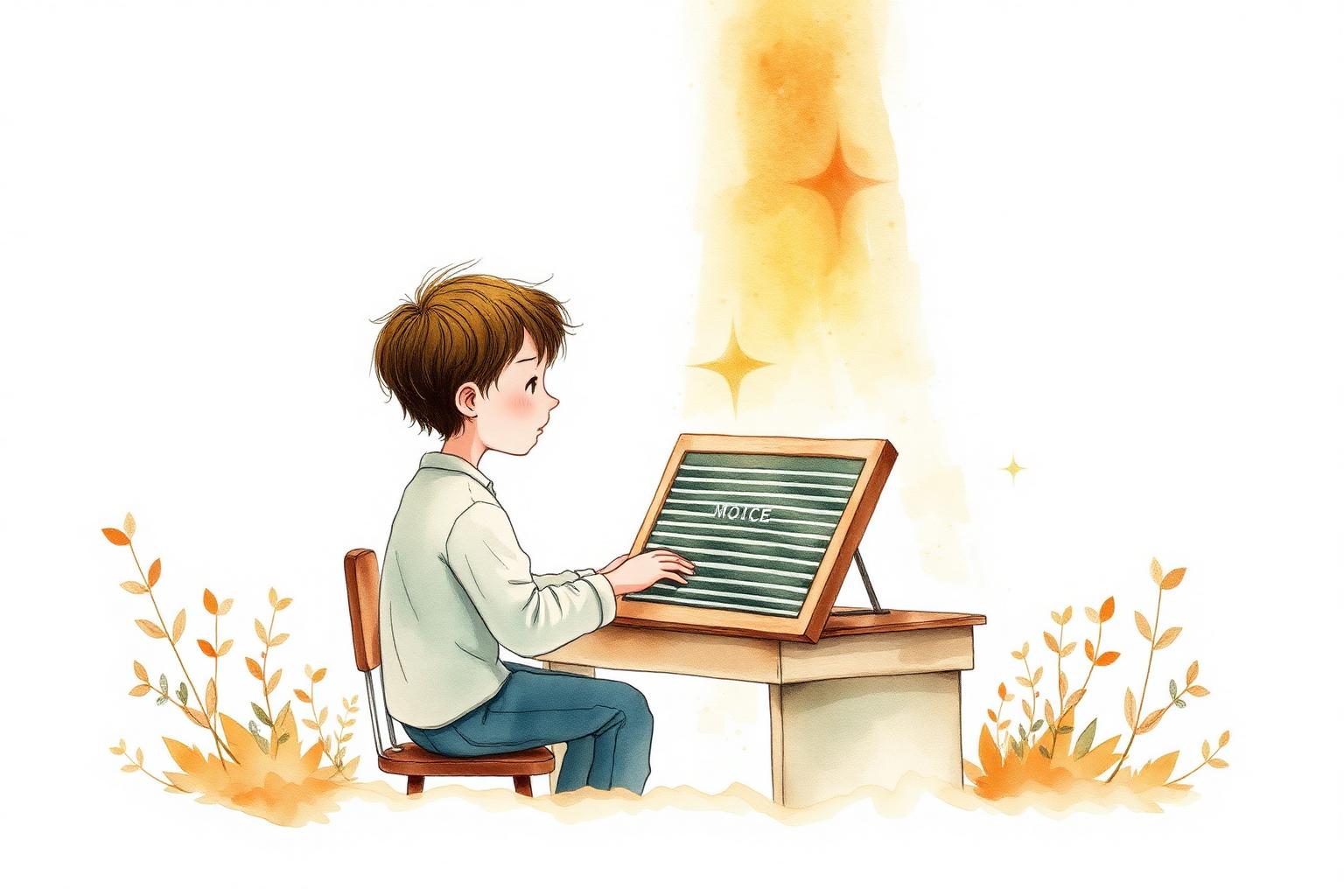
Participants did more than tolerate the augmented reality headset. They adapted to it and, in many cases, helped refine how the HaloBoard functioned. They made choices about layout, pacing, and interaction that aligned with their individual neuromotor profiles. Rather than passive participants, they became collaborators.
Perhaps most strikingly, they did this without a communication partner supporting their responses. There was no hand-over-hand guidance, no subtle cueing, and no intermediary. The output came directly from them, providing clear evidence that authorship had been theirs all along.
The data is becoming clear
For those still relying on outdated studies and longstanding controversies as though the science is settled, it may be time to find a new hobby!
Modern research continues to advance. Neuroscience is evolving. Eye-tracking studies are challenging long-held assumptions. Motor research is revealing how profoundly performance can be affected when the brain knows what it intends to do, but the body cannot reliably execute.
We do not yet have all the answers.
However, the certainty of critics will continue to diminish as new findings emerge, because confidence without evidence cannot endure indefinitely.
The data is becoming increasingly clear: some nonspeakers understand far more than they have been given credit for, and longstanding assumptions about intellectual disability are beginning to shift.
More than ideas
This issue extends beyond ideas. It involves systems built on those assumptions, including established billing codes, entrenched treatment models, and influential industry stakeholders with limited incentive to question the foundations of their own practices and reputations.
Changing the narrative does more than challenge beliefs. It challenges an entire infrastructure.
For some, it is easier to dismiss new possibilities than to confront their implications.
Parents, however, have never stopped imagining. They have never stopped believing that one day their child's voice would emerge.
Now, as these possibilities begin to take shape, they will not back down. Research, clinical evidence, and the lived experience of tens of thousands of nonspeakers already meet the criteria for evidence-based practice. These individuals have worked too hard to unlock their voices to be silenced again by those who are not impacted by whole-body apraxia and who fail to recognize what is truly at stake: their right to be heard, understood, and fully included in their own lives.