Beyond the controversy: why assisted communication still deserves exploration.
For more than three decades, facilitated and assisted communication methods have sat at the center of one of the most emotionally charged debates in disability and autism research. The controversy has become so polarized that an important middle ground is often ignored.
Critics argue that methods such as Facilitated Communication (FC) lack scientific validation and risk attributing words to disabled individuals that may actually originate from facilitators. Supporters argue something equally powerful: if a method helps a nonspeaking person connect, express themselves, reduce frustration, or eventually gain independent communication, should it really be dismissed outright?
The real question is not whether science matters. It absolutely does. The real question is whether the communication needs of nonspeaking individuals are being fully understood — and whether potentially valuable approaches are being discarded too quickly because they challenge traditional assumptions.
The origins of the debate
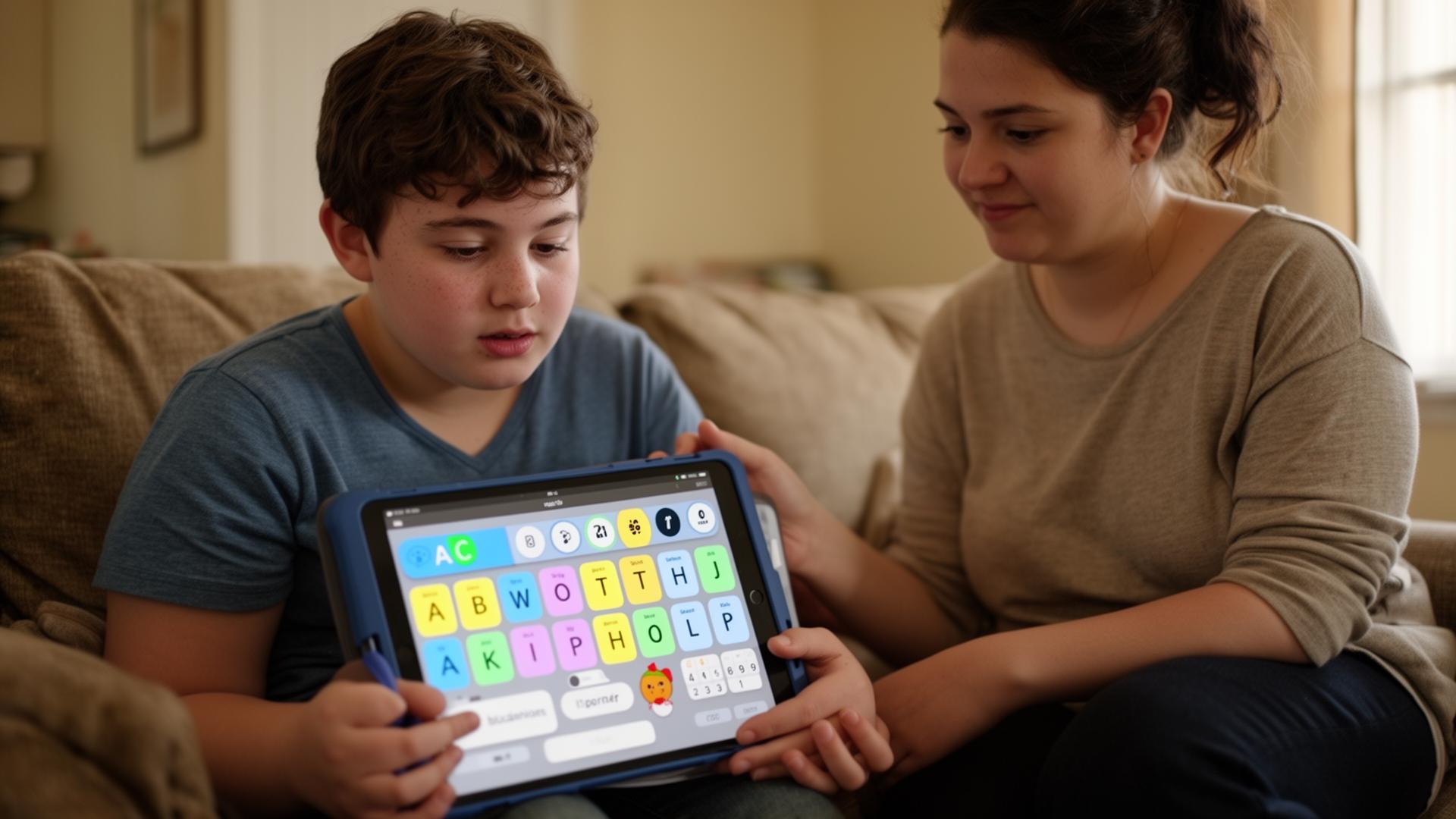
Facilitated Communication emerged in the late 20th century as a method in which a facilitator provides physical or emotional support while a nonspeaking person types or points to letters. Some families and practitioners reported astonishing breakthroughs. Individuals previously assumed to have limited comprehension suddenly appeared capable of complex thoughts, emotional expression, and literacy.
Then came the scientific backlash.
Controlled studies often found that when facilitators did not know the correct answer to a question, the typed responses became inaccurate or inconsistent. Researchers concluded that facilitators were unconsciously influencing communication through subtle movements — a phenomenon known as the ideomotor effect. Professional organizations responded strongly, and FC became widely discredited in mainstream clinical practice.
But while the scientific concerns were real, the conclusions drawn from them may have been too broad.
The problem with absolute rejection
One of the biggest mistakes in disability research is assuming that if a method is imperfect, controversial, or difficult to validate, it has no value whatsoever. Human communication is rarely that simple.
Many nonspeaking autistic individuals face challenges that go beyond language itself. Researchers increasingly acknowledge that motor planning difficulties, apraxia, sensory overload, anxiety, and nervous system dysregulation can profoundly interfere with a person's ability to demonstrate what they know. A person may understand language perfectly while struggling to coordinate the physical act of speech or typing.
Even critics of FC increasingly recognize that traditional intelligence testing and communication assessments may underestimate some nonspeaking individuals. Over time, many methods once viewed skeptically — including alternative communication devices, text-to-speech systems, and eye-gaze technology — eventually gained broader acceptance because clinicians continued exploring them instead of abandoning them. The same principle should apply here.
Support is not the same as fraud
One reason the controversy became so toxic is that the debate was framed in extremes. Either FC was presented as miraculous proof of hidden intelligence, or it was portrayed as complete fabrication. Reality is probably more nuanced.
Supportive communication environments can absolutely help some individuals communicate more effectively. Emotional regulation, physical stabilization, reduced anxiety, prompting, co-regulation, and motor support may all improve performance for certain people. That does not necessarily mean every word produced under support is independently authored. But it also does not mean the underlying communicative ability is fake.
In many areas of rehabilitation and education, support is gradually faded over time. Physical therapy patients use walkers before walking independently. Children learn with guidance before mastering skills alone. AAC users often begin with prompting before developing autonomy. Why should communication support be treated differently?
The goal should not be blind acceptance of every claim. The goal should be helping individuals move toward increasingly independent and verifiable communication while respecting their dignity throughout the process.
Science should investigate, not shut down
Science is most valuable when it investigates difficult questions rather than closing the door on them prematurely. Some critics of FC argue that continuing to explore assisted methods risks harm through false attribution. That concern is legitimate and should never be ignored. Communication methods must be evaluated carefully, especially in legal, medical, or consent-related contexts.
But there is also harm in assuming incompetence.
History contains countless examples of disabled individuals being underestimated because existing systems lacked the tools or imagination to understand them properly. In many cases, society later realized that the limitation was not intelligence itself but access. The possibility that some assisted methods may help unlock communication for certain individuals should not be dismissed simply because the process is messy, incomplete, or controversial.
The ethical response is not to stop exploring. It is to explore responsibly.
A better path forward
Instead of treating the issue as a battle between believers and skeptics, a more productive framework would include:
- Presuming competence while remaining scientifically rigorous
- Supporting all forms of accessible communication
- Encouraging independence and objective validation whenever possible
- Continuing research into motor and sensory challenges in autism
- Listening directly to nonspeaking individuals who describe their experiences
- Recognizing that communication is deeply human, not purely mechanical
Most importantly, the disability community deserves curiosity instead of dismissal. Even if assisted communication methods are not perfect, the experiences of families and nonspeaking individuals should not simply be erased because they make the scientific establishment uncomfortable.
If a method helps someone feel heard, connected, calmer, more expressive, or eventually more independent, that experience has value. It deserves careful study, ethical safeguards, and open-minded investigation — not automatic rejection.
The controversy surrounding facilitated and assisted communication should not end with a verdict of "debunked." It should evolve into a deeper exploration of how human beings communicate, how disability is understood, and how many voices may still be waiting for the right way to be heard.